Featured

Festigraff: An Expression Of Self (assessment)

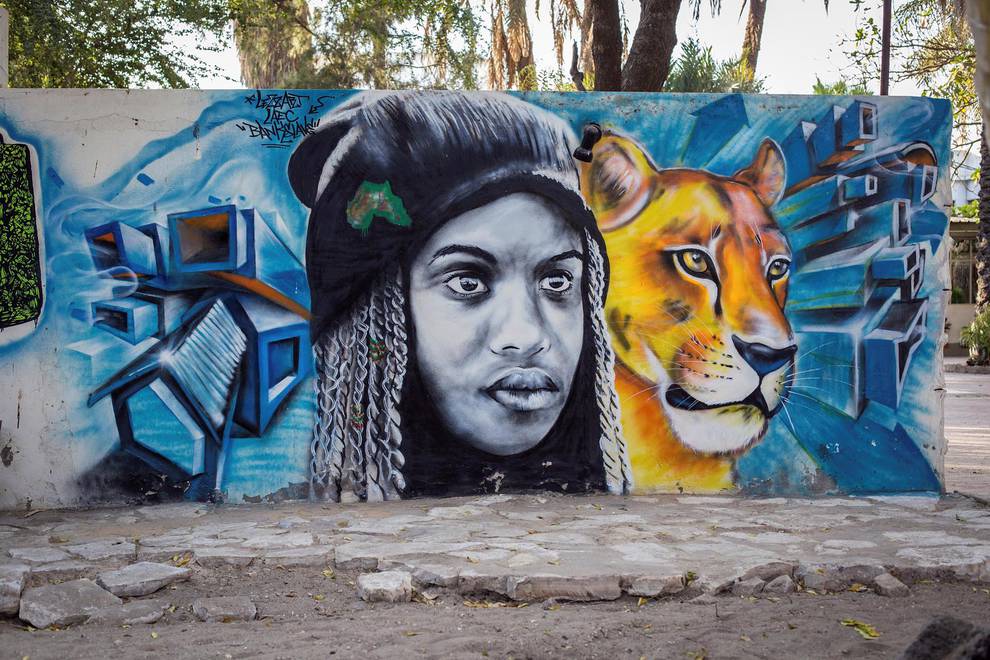
The capital of Senegal, Dakar, is a vibrant and very colourful city. It makes sense then, that it also serves as the hub of the country’s street art scene. Most of the street art here takes the form of spray can graffiti, some of it legal and commissioned, but most of it illegal.

The culmination of this street art takes form in the Festigraff festival held annually in April. Festigraff attracts street artists and audiences from all over the world and holds an increasingly reputable name in the street art community.

The festival also involves live music performances and lots of other festival-related activities which creates a lot of business for local vendors and shop owners.

Street art is such a big part of the expression of the youth of Senegal, and it has produced many world famous artists such as Dicta and Big Key and Deep. Graffiti in Senegal is viewed not as a churlish or immature past time of the youth, but a platform to express political opinions, speak out on certain issues and create awareness around the history of Senegal. Ato Diallo, a co-manager of the festival, stated “the aesthetic is our strategy. Imagine a wide wall. If it’s empty, it doesn’t interest anyone. When we add colours to the wall, it forces people to look. If you look, you see our message… If we put a message against violence and at one side and the face of a beautiful girl on the other, when someone passes by, they’ll first notice the beautiful girl, then automatically, they’ll read what’s there.”

Festigraff brings a vibrancy to Dakar and really provides an incentive for people from around the globe to visit and experience Senegal.

Reference list (In order):
Featured

Senegal and the African stereotype (assessment)

Senegal is not a highly reported on country in the western world, and many people know very little about it (I knew nothing before beginning my research). Despite this apparent lack of knowledge of it from the western world, Senegal faces the danger of being classed as the stereotypical African country. You know the stereotypes, poverty-stricken, diseased, tribal and out of touch with the modern world.

A quick google (let alone a thorough investigation) of Senegal will separate the nation from this myth. It is in fact, a unique and vibrant country that is safe and has a stable political system which allows for the freedom of the people.

Firstly, Senegal is a completely safe place to travel. Robberies and crime committed against travellers in Senegal is quite uncommon. It boasts one of the most stable political systems in Africa, with a functioning democracy, and has been this way since its peaceful transition to independence from the French in 1960.

Senegal does have its fair share of poverty, especially in rural areas which rely on an unpredictable agriculture industry. Despite this, Senegal has an improving economy with optimistic predictions for the future.

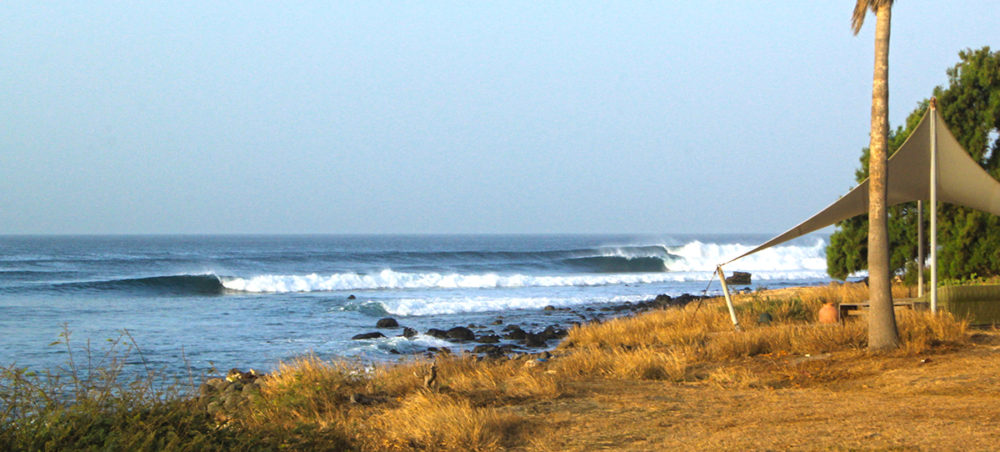
Despite often being categorised within the African country stereotype; Senegal is most certainly its own country. It has a beautiful landscape where plains meet the ocean, with an ever-growing surfing scene gracing its shores. Its cities, namely Dakar, have a growing urban culture and art scene which is fast becoming a global attraction (as touched on in my previous blog) and those who have travel there speak of the incredible hospitality and warmth of the Senegalese people.

Senegal is its own, independent place that will reward those who look further than an African stereotype to truly see what it consists of.

Reference list (in order):

Featured

Travelling to Senegal: Navigation of the language barrier (assessment)

One aspect of travelling to Senegal which would likely provide a big challenge, is the language barrier. As mentioned in previous blogs, the most commonly spoken language is Wolof, and the official language is French. There are also other tribal languages spoken and a small portion of Portuguese.

I am an English speaker who is also competent in Spanish. After some research of travel blogs and articles it seems that there are very few English speakers in Senegal. Seeing as though greetings, positive interactions and hospitality are at the heart of Senegalese culture, a significant language barrier between myself and the locals could potentially hinder my experience of authentic culture.

It is possible that this barrier may also cause me to have culture shock. Not being able to have in depth conversations in a foreign country can be quite stressful. Although I crave difference when travelling, if I am not able to immerse myself in the culture, feel out of place and am not able to converse properly, this may effect my experience. I usually like to travel solo, but this may be a trip where travelling with a friend who can act as a familiar point of reference may be necessary.

It is also worth noting that this language barrier may expose me to scams and cause me trouble with ordering and paying, among other everyday activities.

It seems necessary then, to at least learn a basic level of French (much easier to learn in Australia than Wolof) in order to increase my experience.

Reference list (in order):

Wolof – A symbol of Senegal

Officially, Senegal has French listed as its official language. Arabic is also widely spoken. Despite this, Wolof is the most common spoken language and serves as a symbol that is indicative of what I have learned so far in regards to Senegalese culture.

There are a number of important Senegalese symbols that I could have chosen, including Ataya, a tea ceremony which is an important and social event that holds significant meaning, or the Senegalese flag, which is representative of Senegalese independence and is representative of national values.

Wolof (whose name comes from the Wolof tribe) is a lingua franca language in Senegal. Delana Sobhani describes her experience as a traveller in Senegal and the importance of Wolof as a language and symbol in a blog like article. She explains how in a country with a large number of ethnicities and over 38 languages, Wolof is spoken most commonly and is the vernacular. Sobhani further describes the appreciation and happiness caused when a foreigner attempts to speak Wolof to a local.

It is extremely rare for a country with so many different languages and groups to unite and adopt a common language, and I believe it speaks volumes of the people and culture of Senegal. This is perhaps why all travel pages and descriptions of Senegal describe it as an extremely stable country, which is welcoming to visitors.

As far as I am aware (and I am currently not very aware), there is some resistance within certain places of Senegal to the use of Wolof, but it is still spoken and it is not an issue that interferes with the security of the country.

I would like to further research whether the adoption of Wolof has occurred at the expense of other native languages.

Salaam alaykum (peace be unto you)

References (in order):

Making a social impact in Senegal

There is a lot of opportunity to travel in a social justice capacity in Senegal. Like any country, Senegal has its fair share of social issues, such as economic disadvantage and homelessness. As touched in my previous blog post, Senegal’s rural agricultural communities face a lot of struggle.

It is, however, extremely important to approach social justice activities abroad with the right attitude. Such activities should be done with the aim of offering your particular skillset in order to contribute to positive and sustainable social change, not as something to boast about. Like with all travel, you must keep an open mind and understand your position of privilege and any impact you may have.

There are a number of websites which anyone can visit and use which will facilitate social justice activities in Senegal. Projects Abroad, Go Overseas and Workaway are some of the popular ones.  

A lot of meaningful social engagement in Senegal seems to be related to helping disadvantaged people with entrepreneurship and business ownership as well as education in schools and working with disadvantaged youth.

If I were an expert in agricultural studies or agricultural engineering, I would focus my efforts on helping with struggling rural farmers.

However, I am an arts student with majors in politics and media, and therefore I think that my knowledge would best be put to helping with media research and journalism, things that are healthy for any democracy. This would require me to further my French, to avoid any language barriers.

Design a site like this with WordPress.com
Get started